Let me start with a scenario you might recognize.
You’ve been running your business for a few years now. Things are growing. You’ve got 15 employees, maybe 20. And every month, you or someone on your team spends hours calculating salaries, deducting taxes, filing reports, making sure everyone’s pay is correct and on time. It feels like a full-time job wrapped around your actual job.
Then one of your peers mentions they use a third party payroll service. “Best decision we ever made,” they say. “We haven’t processed payroll ourselves in years.”
Now you’re wondering — should you make the switch too? Is third party payroll actually worth it, or is it just another expense that sounds good but doesn’t deliver? Is it actually good, or is it bad for your business?
These are exactly the questions we’re going to answer in this article. We’re going to look at the data, weigh the pros and cons, and help you figure out whether third party payroll is the right choice for your specific situation.
Let’s dive in.
What Exactly Is Third Party Payroll?
Defining the Concept
Before we get into whether it’s good or bad, let’s make sure we’re on the same page about what we’re actually talking about.
Third party payroll, also called payroll outsourcing, is when you hire an external company to handle some or all of your payroll functions. Instead of processing payslips, calculating deductions, and filing tax forms yourself, you delegate these tasks to a specialized service provider.
These providers range from simple software platforms that automate calculations to full-service firms that handle everything from salary processing to tax filing to benefits administration. The level of service can vary significantly.
The global payroll outsourcing market has been growing steadily, with more businesses recognizing the complexity and time demands of payroll processing. This growth tells us something — lots of companies are finding value in these services.
How It Typically Works
Here’s what the process usually looks like.
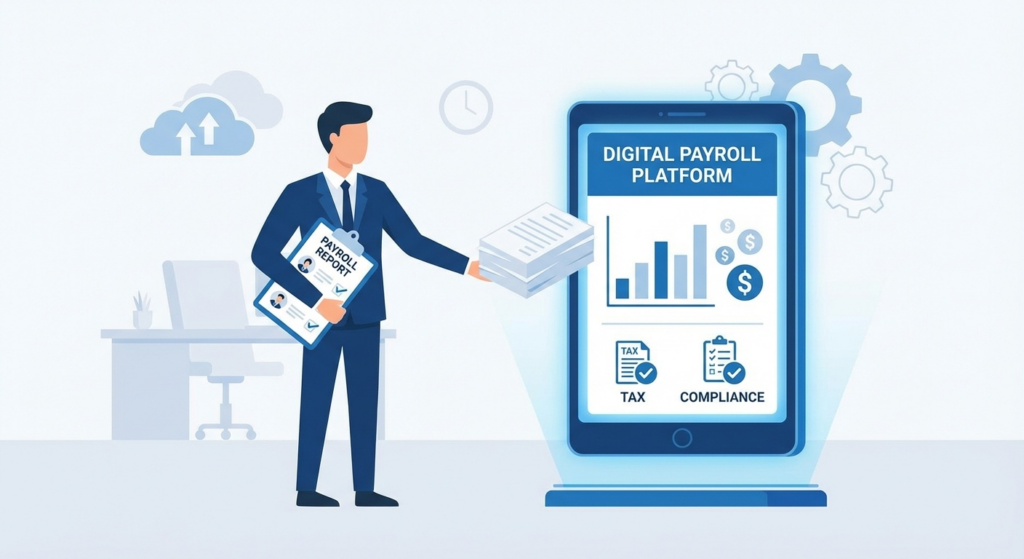
You provide your payroll data to the third party provider — hours worked, salary changes, new hires, deductions. This can often be done through software integrations or simple data entry.
The provider then calculates gross pay, tax withholdings, benefit deductions, and any other withholdings. They process the actual payments to employees, either through their system or yours.
Then they handle the compliance side — filing tax forms, generating reports, keeping up with regulatory changes. This is often where the biggest value lies, because tax compliance is complicated and penalties for mistakes are expensive.
Finally, they provide you with reports and records for your internal files and any audits that might come up.
The Case for Third Party Payroll: Why It Can Be Good
Time Savings That Add Up
Let’s start with the most obvious benefit: time.
When you add up all the hours spent on payroll — calculating pay, verifying deductions, addressing questions, filing reports — it adds up fast. For a business with 20 employees, you might be looking at 10-15 hours per month. That’s essentially a full work week every month, just on payroll.
Now think about what that time could be worth if you invested it in your actual business. Sales calls, product development, customer relationships — these are activities that actually grow your business. Payroll processing doesn’t do any of that.
With third party payroll, that time shrinks dramatically. You submit data, verify the results, and you’re done. What used to take days now takes hours. The time savings alone can make this worthwhile for growing businesses.
Compliance Expertise and Risk Reduction
Here’s where things get serious. Payroll compliance is complicated, and it’s getting more complicated all the time.
Tax laws change regularly. Filing deadlines shift. New reporting requirements get added. And the penalties for getting things wrong can be substantial — we’re talking fines, interest, and in some cases, legal liability.
Third party payroll providers make compliance their business. They stay current with regulations, they file forms correctly, and they have systems designed to catch errors before they become problems. They’re essentially buying insurance against compliance failures.
This expertise is particularly valuable if you’re operating in multiple states or jurisdictions. Each location has its own rules, and tracking them all is nearly impossible for a small business. A good payroll provider makes this complexity disappear.
Also read: HR Payroll Services: What Chennai Businesses Need to Know Before Choosing a Provider
Cost Control and Predictability
Here’s something that might surprise you: third party payroll can actually be cost-effective.
When you process payroll in-house, the costs go beyond the service fee. There’s the time we mentioned. There’s the cost of payroll software. There’s the expense of staying current with tax laws. There are the potential costs of mistakes — IRS penalties, employee complaints, the time it takes to fix problems.
Third party providers typically charge predictable fees, often based on the number of employees or the complexity of your payroll. This makes budgeting easier. You know exactly what you’ll pay each month.
And here’s the economic reality: when you factor in all the hidden costs of in-house payroll, third party services often cost less. You’re trading a known fee for an unknown collection of costs that could be much higher.
The Case Against Third Party Payroll: Potential Drawbacks
The Cost Factor
Let’s be honest — third party payroll isn’t free. You’re adding a recurring expense to your business.
The fees vary widely based on the provider and the level of service, but you can expect to pay anywhere from a few dollars per employee per month for basic services to significantly more for full-service packages that include benefits administration and compliance handling.
For a small business with tight margins, this added cost might be hard to justify, especially if your current payroll process works reasonably well. The question becomes whether the time savings and risk reduction are worth the fees.
Here’s the calculation: How many hours do you spend on payroll each month? What’s your hourly value for those hours? If your time is worth 2500 per hour and you spend 10 hours monthly, that’s $500 in opportunity cost. If third party payroll costs 10000 per month, it’s worth it. If it costs 50000, you need to think carefully.
Loss of Control and Visibility
Some business owners don’t like the idea of giving up control over something as important as employee pay. When you handle payroll yourself, you know exactly what’s happening at every step. You can catch errors immediately. You can make adjustments on the fly.
With a third party provider, there’s a layer between you and the process. Mistakes can happen, and they might take longer to identify and fix. You’ll need to build trust in the provider’s systems and processes.
This loss of control can be particularly concerning for businesses with complex pay structures — employees with multiple pay rates, commissions, bonuses, or deductions that vary month to month. The more complex your payroll, the more you’ll rely on the provider’s ability to handle it correctly.
Integration Challenges
Third party payroll doesn’t exist in isolation. It needs to integrate with your time tracking, your accounting, your benefits administration, and your HR systems.
These integrations aren’t always seamless. You might encounter technical issues, data sync problems, or compatibility challenges that create more work than they solve. The promise of simplification can sometimes become a different kind of complexity.
Before choosing a provider, it’s worth investigating how well their system integrates with your existing tools. The last thing you want is to add a payroll provider only to create new data headaches.
Also read: Payroll Services for Small Business in Chennai: The Complete 2026 Guide
Making the Decision: Factors to Consider
Business Size and Complexity
Here’s the honest truth: third party payroll makes more sense for some businesses than others.
If you’re a small business with simple payroll — straightforward salaries, minimal deductions, one or two locations — you might not need a third party provider. Your current process might work fine, and the costs might not be justified.
If you’re a growing business with increasing complexity — multiple pay rates, benefits to manage, several locations, varying state requirements — third party payroll starts to make more sense. The complexity is where the risks and time demands multiply.
| Consider Third Party If: |
|---|
| You have 10+ employees |
| Payroll takes more than 5 hours per month |
| You operate in multiple states or countries |
| You have complex compensation structures |
| Tax compliance feels overwhelming |
| You’re frequently changing employee count |
| You lack dedicated HR/payroll staff |
Internal Capabilities
What matters is what you’re actually capable of handling well.
If you or someone on your team is highly competent at payroll processing, stays current with regulations, and has systems that work reliably, you might not gain much from outsourcing. The question becomes whether that person’s time is best spent on payroll or on higher-value activities.
If payroll is a constant source of stress, errors, or time drain, that’s a strong signal that third party payroll could help. The stress reduction alone has value, even if it’s hard to quantify.
Growth Trajectory
Here’s something forward-thinking to consider: where is your business going?
If you’re planning to grow significantly over the next year or two, third party payroll can scale with you. Adding employees to a third party system is typically easier than building internal capacity. The complexity that comes with growth is exactly what third party providers are designed to handle.
If your business is stable or shrinking, the calculation changes. You might not need the scalability, and the costs might be harder to justify.
Types of Third Party Payroll Services
Basic Payroll Software
At the simplest level, you have payroll software platforms that automate calculations and can handle filing. These are essentially sophisticated calculators that replace spreadsheets and manual processes.
They’re typically the most affordable option and work well for businesses with straightforward payroll needs. You do more of the work yourself, but the software reduces errors and saves time on calculations.
The trade-off is that you still handle compliance and filing. The software helps, but you’re responsible for getting things right.
Full-Service Payroll Providers
These providers handle everything from start to finish. You submit data, they process payments, file taxes, and handle compliance. You essentially outsource the entire function.
This is the most hands-off option, but also the most expensive. It’s ideal for businesses that want to completely remove payroll from their to-do list.
PEOs and HR Outsourcing
A Professional Employer Organization (PEO) takes things a step further. They become the employer of record for certain purposes, handling benefits administration, compliance, and often payroll as part of a comprehensive HR package.
This approach makes sense for businesses that want to outsource their entire HR function, not just payroll. It can simplify benefits management and reduce liability, but it also means giving up more control.
| Option | What They Do | Cost Range |
|---|---|---|
| Payroll Software | Calculate + Reports | 1000-10000 INR/month |
| Full-Service Provider | Process + File Taxes | 10000-50000 INR/month |
| PEO | Full HR + Payroll | 20000-100000+ INR/month |
| Costs vary based on employee count and service level |
What the Market Data Shows Us
Industry Growth and Adoption
The payroll outsourcing market has been growing consistently, and that growth tells us something important. Businesses are voting with their wallets, and they’re choosing to outsource.
The drivers of this growth are exactly what we’ve discussed: increasing complexity of payroll and tax compliance, the time demands of manual processing, and the desire to focus on core business activities rather than administrative tasks.
Small and medium businesses have been the fastest-growing segment of the outsourcing market, recognizing that they often don’t have the resources to handle payroll as effectively as specialized providers.
Also read: Online Payroll Services in Chennai: The Complete Guide for 2026
Satisfaction and Outcomes
Research on businesses that use third party payroll services shows generally high satisfaction levels. The convenience factor is significant, and the compliance assurance provides real peace of mind.
That said, satisfaction varies by provider and by business. The key is choosing a provider that matches your specific needs and level of service required.
Is Third Party Payroll Good For You?
Before you decide whether to go with third party payroll, here’s what you should honestly evaluate:
How much time does payroll currently take? If it’s a few hours monthly, the savings might not justify the cost. If it’s consuming significant time, third party payroll likely makes sense.
How complex is your payroll? Simple, straightforward pay for a stable team might not need outsourcing. Complex arrangements with varying pay types, benefits, and multiple locations almost certainly benefit from external expertise.
How confident are you in your compliance? If tax filings keep you up at night, that’s a strong signal. If you have systems that work and you stay current, the value proposition is different.
What’s your growth trajectory? If you’re adding employees, expanding locations, or increasing complexity, third party payroll scales with you. If you’re stable, calculate carefully.
A Practical Approach
Here’s what I’d suggest if you’re on the fence.
Start by calculating the true cost of your current payroll process. Include the time spent, the cost of any software, and the potential cost of errors. Be honest about this number.
Then get quotes from a few third party providers. Understand what you’re actually paying and what you’re getting for that money.
Compare the numbers. But also compare the intangibles — peace of mind, time savings, compliance assurance. These matter, even if they’re harder to quantify.
If the numbers are close, consider starting with a basic payroll service rather than full outsourcing. You can always scale up if needed.
Final Thoughts
So, is third party payroll good or bad? The honest answer is: it depends.
For some businesses, it’s an excellent investment that saves time, reduces risk, and lets owners focus on what actually grows their business. For others, it’s an unnecessary expense that doesn’t add enough value to justify the cost.
The key is understanding your specific situation. Your business size, your complexity, your growth trajectory, your internal capabilities — all of these factor into the right answer.
At BayBall HR, we’ve helped businesses navigate this decision countless times. The businesses that benefit most from third party payroll are typically those with growing complexity, limited internal expertise, and a desire to focus on core business activities rather than administrative processes.
If you’re unsure, start by calculating your current costs honestly. Get some quotes. Have conversations with providers. The right decision will become clearer once you have the numbers in front of you.
Your employees deserve to get paid correctly and on time. That’s the non-negotiable foundation. The question is just how you want to achieve that foundation — and whether third party payroll gets you there more effectively than what you’re doing today.